In the auto parts wholesale trade, deals rarely stall on price — they stall on the model. Engine oil coolers are one of the easiest parts to get wrong: two units can look almost identical, but a port sitting slightly off, or a slightly different hole spacing, means the part simply will not fit. The shipment goes back and forth, and meanwhile your customer's vehicle sits waiting in the workshop.
Many buyers are used to quoting just "this model, that year" and assuming that settles it. In reality, the same vehicle with the same engine can carry different coolers depending on the production year and the market it was sold in: some are round canister types, others stacked-plate; the direction of the oil ports and the number of holes in the mounting flange can differ too. On top of that, the label on the old part is usually worn away, so there is no OE number to look up. Guessing from the vehicle model alone means getting it right is luck — and getting it wrong is the norm. That is why the answer to "how do I identify an engine oil cooler?" is not in a vehicle table. It is in the old part itself.
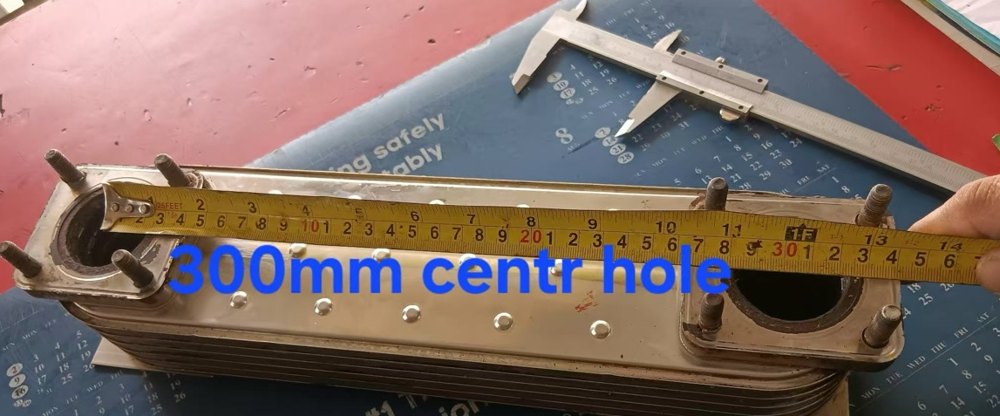
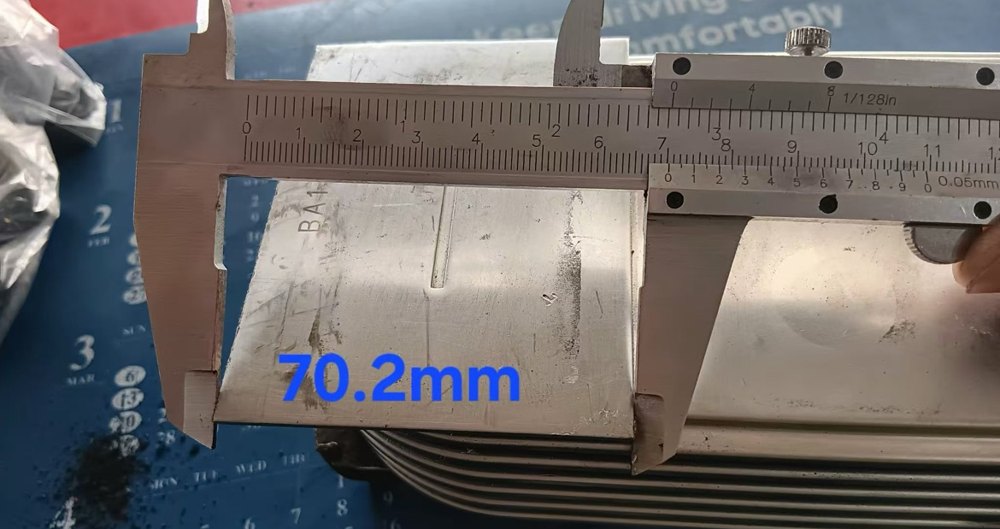
No OE number is no reason to panic, and there is no need to measure everything and report numbers yourself — one digit passed on wrong, and everything is wrong. The method is simple: lay a caliper or a tape measure on the old cooler, take a few photos and send them to us. We read the scale straight from your photos. Four photos are usually enough:
Two things to watch when you shoot: hold the camera square-on, not at an angle, and keep the caliper scale clear of glare and fingers. There is no need to wash the old part — oil and grime do not affect the judgement, as long as the ports are not covered.
Photos alone are one step short: tell us the engine model as well. The engine usually carries a data plate with the model on it — photograph it and send it over. If there is no plate, just tell us which engine it is and what vehicle it sits in. The engine model narrows the field; the photo measurements pin down the detail. Put the two together and the model is confirmed, without going back and forth guessing.
We run our own factory in Chiping, Liaocheng, Shandong, making engine oil coolers only, in 304 stainless steel with copper brazing. The factory can produce more than 1,000 models in total; our catalogue lists the 300-plus most common ones. When your photos arrive, we first read the measurements, then match the dimensions and the port layout against the catalogue and the factory drawings. Only when they match do we come back with a confirmation.
And we will be straight with you: if the photos are genuinely unreadable, or the part is outside what we can make, we will say so plainly — we cannot confirm it, we cannot make it — instead of pushing a "close enough" part on you. We sell wholesale only, from 100 pieces per order, and different models can be mixed in one order. The bigger the quantity, the less room there is for guessing the model. Ten minutes spent pinning the model down first saves far more trouble than a return shipment later.
When you are preparing an order, start by browsing the catalogue and narrowing the field by canister type, stacked-plate type and engine family. For anything you cannot pin down, take the photos described above and send them over: confirm the model first, then talk quantity and price. That way you place your order with a clear head.
WhatsApp: +86 133 0635 5514 · Email: [email protected]